

Estimated Reading Time: 8 minutes
Introduction
In an unprecedented achievement that has shaken the technology and financial sectors, NVIDIA Corporation has officially crossed the $4 trillion market capitalization milestone, becoming only the second company in history after Apple to do so. This monumental success not only underscores NVIDIA’s dominant role in the artificial intelligence (AI) and semiconductor markets, but also marks a turning point in the evolution of modern computing infrastructure.
With its roots in graphics processing units (GPUs) for gaming, NVIDIA has transformed into the powerhouse behind the AI revolution, data centers, autonomous vehicles, and high performance computing. This blog delves into how NVIDIA reached this milestone, the key drivers behind its growth, and what the future holds.
NVIDIA GTC Paris:
What Does a $4 Trillion Valuation Mean?
A NVIDIA’s historic milestone of $4 trillion market cap represents the combined value of all outstanding shares of NVIDIA’s stock. It is a reflection of investor confidence in the company’s revenue growth, innovation pipeline, market leadership, and future profitability. For perspective, this valuation:
- Exceeds the GDP of most countries, including Germany and the United Kingdom.
- Places NVIDIA in an elite group of companies with global economic influence.
- Sends a clear message about the critical role of AI and semiconductor technologies.

Yahoo Finance Report on Stock Market
How Did NVIDIA Achieve This Milestone?
1. Dominance in AI and Machine Learning
NVIDIA’s GPUs are the backbone of the AI boom. From training large language models like ChatGPT to powering generative AI and autonomous driving systems, NVIDIA’s hardware and software ecosystem is indispensable. Its CUDA platform remains the industry standard for developing deep learning applications.
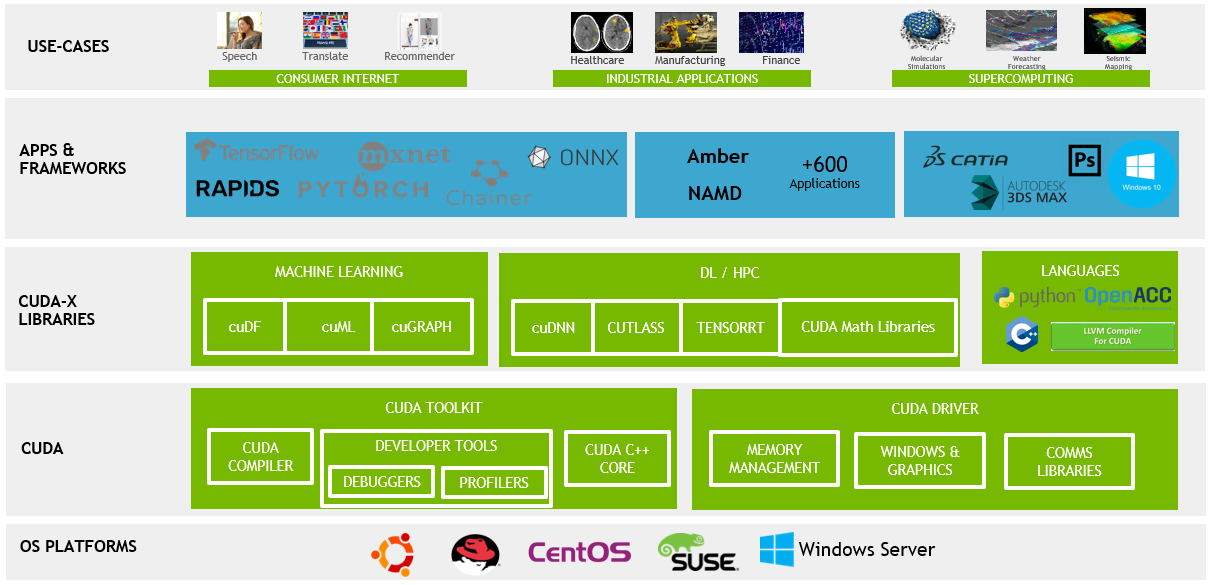
NVIDIA CUDA GPU Compute Capability
2. Data Center Growth
NVIDIA has redefined data centers with its GPU-accelerated computing model. Traditionally, data centers relied heavily on CPU-based infrastructure. But as AI and high-performance computing grew more prominent, CPUs became bottlenecks.
NVIDIA’s DGX SuperPODs, Grace Hopper Superchips, and NVLink interconnects now power data centers for Fortune 500 companies and major governments alike. The ability to handle vast amounts of data at unprecedented speeds made NVIDIA the default choice.
With the launch of NVIDIA DGX Cloud, customers can now access supercomputing power as a service, creating new revenue streams and strengthening recurring income models.
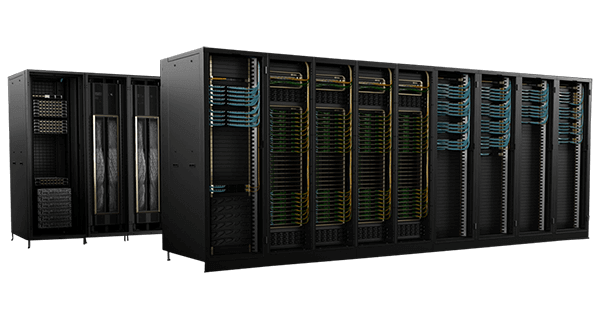
Product Link: Official NVIDIA Page
3. Innovative Product Pipeline
One of the main pillars of NVIDIA’s historic $4 trillion valuation is its relentless focus on innovation across the product pipeline. The company has built a layered ecosystem of hardware, software, and services that evolves rapidly to meet emerging demands in AI, HPC, gaming, robotics, and edge computing.
Key Elements of the Product Pipeline:
1. Blackwell GPU Architecture
NVIDIA’s Blackwell GPU series, expected to launch in late 2025, is the next frontier of generative AI computing. It features:
- Energy-efficient tensor cores
- High-bandwidth memory for trillion-parameter models
- Improved scalability for multi-GPU systems
2. Grace and Grace Hopper Superchips
The ARM-based Grace CPU and its hybrid counterpart Grace Hopper have redefined compute for data centers:
- Grace: For memory-intensive workloads
- Grace Hopper: CPU-GPU integration for unified memory and compute
3. RTX GPUs for Gamers and Creators
With its 40-series and upcoming 50-series, NVIDIA continues to lead the gaming and creator markets:
- Ray tracing and DLSS enhancements
- Studio driver optimizations for professional content creation
4. NVIDIA DRIVE for Autonomous Vehicles
An evolving suite of hardware-software stacks for L2+ to L5 autonomy, integrated with simulation tools, digital twins, and automotive partnerships.
5. Jetson and Isaac for Robotics and Edge AI
NVIDIA is placing bets on the next generation of robotics:
- Jetson Orin modules: Powerful edge compute units for industrial robots
- Isaac Sim: Simulation platform for training robots in digital twin environments
6. NVIDIA AI Enterprise
A complete suite of enterprise-grade AI frameworks and APIs, optimized to run across NVIDIA’s hardware and cloud platforms.
7. Omniverse Expansion
Future updates will bring:
- Cross-platform integration with Unity and Unreal
- More realistic physics and rendering
- Vertical-specific tools for architecture, engineering, and manufacturing
Each of these products is tightly integrated into a broader platform approach, ensuring NVIDIA’s growth is sustained across multiple industries.
4. Strategic Acquisitions and Partnerships
From its attempted acquisition of ARM (which, despite regulatory setbacks, signaled its ambitions) to its collaborations with major car manufacturers and cloud providers, NVIDIA has built a network of strategic alliances that strengthen its ecosystem.
5. Stock Market Momentum and Investor Optimism
Wall Street has increasingly bet on AI as the next big thing, and NVIDIA stands at the center. Its stock has surged over 600 percent in the last two years, driven by stellar earnings and forward looking guidance.
Timeline of NVIDIA’s Ascent to $4 Trillion
| Year | Milestone |
|---|---|
| 1993 | NVIDIA founded in Santa Clara, California |
| 1999 | Launched first GPU: GeForce 256 |
| 2016 | Released CUDA toolkit and entered deep learning space |
| 2020 | Surged in value during pandemic fueled tech rally |
| 2023 | Crossed $1 trillion market cap due to AI demand explosion |
| 2024 | Surpassed $2.5 trillion, becoming top semiconductor company by valuation |
| 2025 | Hits $4 trillion, second highest valued company globally |
The AI Boom: NVIDIA’s Golden Goose
The AI gold rush of the 2020s has propelled NVIDIA into the limelight. Chatbots, virtual assistants, self driving cars, drug discovery, predictive analytics — all rely on GPUs for training and inference. OpenAI’s GPT models, Google’s Gemini, Meta’s LLaMA, and Amazon’s Titan all cite NVIDIA GPUs as their primary computing platforms.
Moreover, the rise of edge AI has expanded NVIDIA’s relevance into drones, security cameras, industrial automation, and medical imaging — creating a multibillion dollar revenue stream beyond data centers.
Bloomberg Report: NVIDIA Hits $4 Trillion Value
Strategic Bets That Paid Off
1. Shift to AI as a Platform
NVIDIA isn’t just selling chips. It’s selling AI infrastructure as a platform, including hardware, software, SDKs, cloud services, and development tools.
2. Omniverse and Digital Twins
The NVIDIA Omniverse platform enables industries to create digital twins of real world assets — from factories to cities. Used by BMW, Siemens, and others, it’s poised to revolutionize design, simulation, and automation.
3. Enterprise and Healthcare AI
NVIDIA Clara and NVIDIA DGX platforms are used in drug discovery, medical diagnostics, genomics, and radiology. AI is speeding up scientific discovery — and NVIDIA is enabling it.
Global Implications
NVIDIA’s $4 trillion valuation isn’t just a stock market story. It has deep geopolitical and economic implications:
- Silicon Supremacy: The US strengthens its lead in AI and semiconductor dominance.
- China Tensions: With US export restrictions on high end chips, China sees NVIDIA as a strategic concern.
- National Security: As AI becomes core to defense, space, and intelligence, NVIDIA’s technology becomes critical infrastructure.
- Economic Influence: From university research to military simulation, NVIDIA’s impact is borderless.
What Critics Say
Despite the fanfare, some analysts caution that:
- Valuation may be overextended, subject to correction.
- Competition from AMD, Intel, and emerging AI chipmakers like Cerebras and Graphcore is intensifying.
- A bubble in AI could mirror the dotcom bust if applications fail to deliver expected ROI.
- Supply chain constraints and geopolitical conflicts could hamper production.
What the Future Holds
NVIDIA has already announced its next generation Rubin AI chips, aiming for 2026 launch. The company is also investing in:
- Quantum computing collaboration
- AI safety research initiatives
- Global data center expansion
- More energy efficient GPU architectures
With AI becoming foundational to all industries, NVIDIA’s growth may still be in early innings.
Reference Links
- NVIDIA Market Cap Milestone
🔗 https://www.reuters.com/technology/nvidia-joins-4-trillion-club-2025 - NVIDIA Quarterly Earnings Report
🔗 https://investor.nvidia.com - AI Boom and ChatGPT’s Role
🔗 https://www.nytimes.com/2023/05/30/technology/nvidia-ai-boom.html - NVIDIA’s H100 GPU Details
🔗 https://www.nvidia.com/en-us/data-center/h100/ - NVIDIA DGX Systems and DGX Cloud
🔗 https://www.nvidia.com/en-us/data-center/dgx-cloud/ - NVIDIA’s Automotive Solutions (Drive PX, Orin)
🔗 https://www.nvidia.com/en-us/self-driving-cars/drive-platform/ - NVIDIA Omniverse Platform
🔗 https://developer.nvidia.com/nvidia-omniverse-platform - NVIDIA Grace Hopper Superchip
🔗 https://www.nvidia.com/en-us/data-center/grace-hopper-superchip/ - NVIDIA Clara and Parabricks in Healthcare
🔗 https://developer.nvidia.com/clara - NVIDIA’s Role in the Metaverse
🔗 https://blogs.nvidia.com/blog/2022/01/04/omniverse-metaverse-future/ - Sustainable Chip Design by NVIDIA
🔗 https://www.nvidia.com/en-us/about-nvidia/environment/ - NVIDIA and U.S.-China Export Restrictions
🔗 https://www.cnbc.com/2023/10/18/us-restricts-ai-chip-exports-to-china-nvidia-reacts.html - Competitors in AI Chip Market (AMD, Intel)
🔗 https://www.tomshardware.com/news/amd-vs-nvidia-ai-gpus - Stock Buybacks and Financial Strategy
🔗 https://finance.yahoo.com/news/nvidia-announces-massive-stock-buyback-2023
Expert Commentary
Jensen Huang, CEO of NVIDIA:
“This is the age of accelerated computing and generative AI. We are just getting started.”
Cathie Wood, CEO of ARK Invest:
“NVIDIA is the railroad of the AI age. It’s laying the tracks for the next industrial revolution.”
Morgan Stanley Analyst Report:
“With unmatched hardware and an expanding software moat, NVIDIA is uniquely positioned to lead AI infrastructure for the foreseeable future.”
FAQs
What makes NVIDIA different from other chipmakers?
NVIDIA’s combination of GPU hardware, AI software stacks, and integrated platforms sets it apart. It’s not just a chip company — it’s an AI ecosystem leader.
Is NVIDIA a safe investment at $4 trillion?
While the fundamentals are strong, investors should be cautious of market hype and short term volatility.
How does NVIDIA impact everyday life?
From your smartphone camera to Netflix recommendations, NVIDIA powered AI is shaping daily experiences.
Can any company catch up to NVIDIA?
AMD, Intel, and specialized chipmakers are catching up, but NVIDIA has a deep head start in infrastructure, tooling, and partnerships.
Conclusion
From gaming GPUs to AI dominance, NVIDIA’s journey to $4 trillion is a masterclass in visionary execution. It is more than just a chipmaker—it is the infrastructure layer of the modern AI economy. With its continued innovation across sectors and strategic partnerships, NVIDIA seems poised to define the next decade of computing.


