

Estimated Reading Time: 14 minutes
Introduction
Bluetooth technology has transformed the way we connect devices, creating seamless wireless experiences that define modern digital lifestyles. From the first clunky wireless headsets to today’s sophisticated smart home ecosystems, Bluetooth has evolved into one of the most ubiquitous wireless communication protocols worldwide. Understanding how Bluetooth works and exploring the groundbreaking innovations in Bluetooth Low Energy 5.0 reveals the technology driving countless applications from fitness trackers to industrial IoT solutions.
The latest advancement in Bluetooth Low Energy 5.0 represents a revolutionary leap forward, delivering unprecedented range, speed, and connectivity capabilities that are reshaping wireless communication landscapes. This cutting-edge protocol enhancement enables new applications previously impossible while dramatically improving existing device performance across multiple industries and consumer segments.

Understanding Bluetooth Technology Fundamentals
Bluetooth operates as a short-range wireless communication protocol designed to replace cables and enable device-to-device connectivity within personal area networks. The technology utilizes radio waves in the unlicensed 2.4 GHz ISM band, employing sophisticated frequency-hopping spread spectrum techniques to minimize interference and maintain reliable connections in crowded electromagnetic environments.
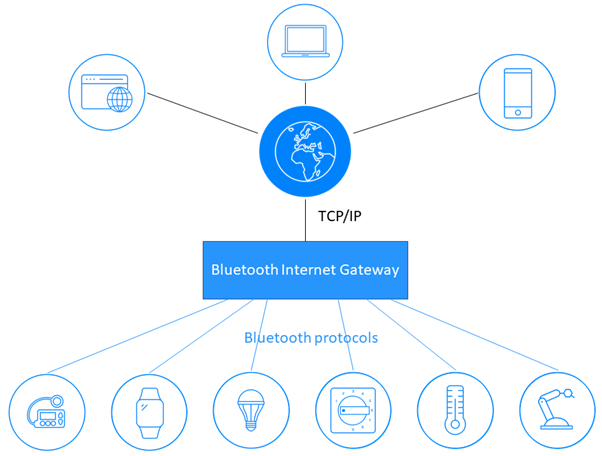
The protocol functions through a master-slave architecture where one device initiates connections and manages communication with multiple peripheral devices simultaneously. This approach enables complex network topologies including point-to-point connections, star networks, and mesh configurations depending on the specific Bluetooth version and implementation requirements.
Bluetooth communication occurs through carefully orchestrated pairing processes that establish secure connections between devices. The initial discovery phase involves devices advertising their presence and capabilities, followed by authentication procedures that ensure authorized access and encrypted data transmission for enhanced security and privacy protection.
Core Bluetooth Operating Principles
Frequency Hopping Mechanism
Bluetooth employs frequency-hopping spread spectrum technology that rapidly switches between 79 different frequency channels within the 2.4 GHz band. This hopping occurs 1,600 times per second, creating a pseudo-random pattern that minimizes interference from other wireless devices operating in the same frequency range including Wi-Fi networks, microwave ovens, and industrial equipment.
The frequency-hopping sequence follows predetermined algorithms synchronized between connected devices, ensuring both transmitter and receiver switch to identical frequencies simultaneously. This coordination maintains communication integrity while providing inherent resistance to interference and eavesdropping attempts that plague fixed-frequency wireless systems.
Packet Structure and Data Transmission
Bluetooth data transmission utilizes carefully structured packets containing headers, payload data, and error correction information. Each packet includes synchronization sequences, device addresses, packet type identifiers, and cyclic redundancy checks that ensure reliable data delivery even in challenging electromagnetic environments.
The protocol supports various packet types optimized for different applications, from simple control messages requiring minimal overhead to high-throughput data streams for audio and video applications. Adaptive packet selection algorithms automatically choose appropriate packet formats based on connection quality and application requirements.
Power Management Strategies
Traditional Bluetooth implementations incorporate sophisticated power management techniques including sniff mode, hold mode, and park mode that reduce energy consumption during periods of reduced activity. These mechanisms enable devices to maintain connections while minimizing battery drain, extending operational life for portable devices.
Advanced power management algorithms monitor connection requirements and automatically adjust transmission power levels, connection intervals, and active communication periods. These optimizations balance performance requirements with energy efficiency, enabling prolonged operation for battery-powered devices while maintaining acceptable user experiences.
Evolution from Classic Bluetooth to BLE
Classic Bluetooth Characteristics
Classic Bluetooth, also known as Bluetooth BR/EDR (Basic Rate/Enhanced Data Rate), was designed primarily for continuous data streaming applications such as audio transmission, file transfers, and keyboard/mouse connectivity. These implementations typically maintain persistent connections and consume relatively high power levels unsuitable for battery-sensitive applications.
The protocol supports data rates up to 3 Mbps with Enhanced Data Rate implementations while maintaining backward compatibility with original Basic Rate specifications. Classic Bluetooth excels in applications requiring sustained data throughput but struggles with power efficiency for intermittent communication scenarios.
Bluetooth Low Energy Introduction
Bluetooth Low Energy represents a complete protocol redesign optimized for applications requiring minimal power consumption while maintaining reliable connectivity. Unlike Classic Bluetooth’s connection-oriented approach, BLE employs advertisement-based communication that enables devices to transmit information without establishing formal connections.
BLE devices can operate for months or years on single battery charges while providing essential connectivity for sensors, beacons, and monitoring devices. The protocol’s efficiency stems from optimized radio designs, reduced protocol overhead, and intelligent power management strategies specifically engineered for intermittent communication patterns.
Dual-Mode Implementation Benefits
Modern Bluetooth implementations often incorporate dual-mode capabilities supporting both Classic Bluetooth and BLE protocols within single chip solutions. This approach enables devices to maintain compatibility with legacy equipment while leveraging BLE advantages for power-sensitive applications.
Dual-mode devices can simultaneously operate Classic Bluetooth connections for high-throughput applications like audio streaming while maintaining BLE connections for sensor data collection or notification services. This flexibility maximizes device utility while optimizing power consumption for different application requirements.
Bluetooth Low Energy 5.0 Revolutionary Features
Quadrupled Range Capabilities
BLE 5.0 introduces dramatic range improvements delivering up to four times the transmission distance compared to previous BLE versions. This enhancement enables reliable communication over distances exceeding 200 meters in open environments, expanding application possibilities for smart home systems, industrial monitoring, and outdoor tracking applications.
The extended range results from improved radio sensitivity, enhanced antenna designs, and optimized signal processing algorithms that maintain connection quality over greater distances. These improvements enable new deployment scenarios previously requiring multiple intermediate devices or alternative communication technologies.
Doubled Speed Performance
The latest BLE specification doubles data transmission speeds compared to BLE 4.2, achieving throughput rates up to 2 Mbps for applications requiring rapid data exchange. This improvement significantly reduces latency for time-sensitive applications while enabling more sophisticated device interactions and richer user experiences.
Enhanced speed capabilities particularly benefit applications involving frequent data exchanges, software updates, and interactive device control. The improved performance enables more responsive smart home systems, faster fitness data synchronization, and enhanced gaming experiences with BLE-connected peripherals.
Octuple Message Capacity
BLE 5.0 dramatically expands advertising packet capacity by up to eight times previous versions, enabling devices to transmit substantially more information without establishing formal connections. This enhancement proves particularly valuable for beacon applications, sensor networks, and location-based services requiring rich contextual information.
Expanded message capacity enables sophisticated applications including detailed product information transmission, enhanced navigation services, and comprehensive sensor data broadcasting. These capabilities facilitate new business models and user experiences previously constrained by limited data transmission capacity.
Advanced BLE 5.0 Technical Enhancements
Improved Interoperability Standards
BLE 5.0 incorporates enhanced interoperability requirements ensuring better compatibility between devices from different manufacturers. Rigorous testing standards and certification processes minimize connection issues and improve user experiences across diverse device ecosystems.
The specification includes mandatory support for specific features and protocols that were optional in previous versions, creating more predictable device behavior and reducing implementation fragmentation. These standardization efforts benefit both developers and end users through improved reliability and consistent performance expectations.
Enhanced Security Mechanisms
Advanced encryption algorithms and authentication procedures in BLE 5.0 provide robust security for sensitive applications including healthcare monitoring, financial transactions, and industrial control systems. The specification incorporates lessons learned from security research and addresses vulnerabilities identified in earlier implementations.
New security features include enhanced key management, improved authentication processes, and protection against various attack vectors including eavesdropping, man-in-the-middle attacks, and unauthorized device access. These security enhancements enable BLE deployment in applications requiring high security standards.
Mesh Network Support
BLE 5.0 introduces comprehensive mesh networking capabilities enabling large-scale device networks with self-healing properties and extended coverage areas. Mesh networks allow devices to relay messages through intermediate nodes, creating robust communication infrastructures suitable for building automation, industrial monitoring, and smart city applications.
The mesh networking implementation supports thousands of connected devices with intelligent routing algorithms that automatically adapt to network changes, device failures, and signal obstructions. This scalability enables deployment scenarios previously requiring more complex and expensive networking solutions.
Real-World Applications and Use Cases
Smart Home Integration
BLE 5.0 enables sophisticated smart home ecosystems connecting lighting systems, security devices, environmental sensors, and entertainment equipment through unified wireless networks. The enhanced range and message capacity facilitate seamless device interactions while extended battery life reduces maintenance requirements for wireless sensors and controls.
Modern smart home implementations leverage BLE mesh networking to create comprehensive automation systems that respond intelligently to user preferences, environmental conditions, and security requirements. These systems integrate with voice assistants and mobile applications providing intuitive control interfaces and automated responses.
Healthcare and Fitness Monitoring
Wearable devices and medical sensors utilize BLE 5.0 capabilities to provide continuous health monitoring with minimal impact on battery life. Enhanced data transmission speeds enable real-time vital sign monitoring while extended range supports applications in clinical environments and home healthcare scenarios.
Advanced healthcare applications include continuous glucose monitoring, cardiac rhythm analysis, medication compliance tracking, and emergency response systems. The improved security features ensure patient privacy protection while enabling authorized healthcare provider access to critical medical information.
Industrial IoT Solutions
Manufacturing facilities and industrial operations deploy BLE 5.0 sensors for equipment monitoring, predictive maintenance, and process optimization. The enhanced range and mesh networking capabilities enable comprehensive monitoring systems covering large facilities while reduced power consumption extends sensor operational life in challenging environments.
Industrial applications include vibration monitoring, temperature tracking, pressure sensing, and asset location services. These systems provide early warning capabilities for equipment failures while optimizing maintenance schedules and reducing operational costs through predictive analytics and automated reporting.
Retail and Marketing Innovation
Retailers leverage BLE 5.0 beacon technology to deliver personalized shopping experiences, location-based promotions, and inventory management solutions. Enhanced message capacity enables transmission of detailed product information, pricing updates, and promotional content without requiring dedicated mobile applications.
Advanced retail implementations include indoor navigation services, automated checkout systems, and customer behavior analytics. These applications enhance shopping experiences while providing valuable business intelligence for inventory optimization and marketing strategy development.
Technical Implementation Considerations
Power Management Optimization
BLE 5.0 implementations require careful power management design to achieve maximum efficiency benefits. Developers must optimize advertising intervals, connection parameters, and data transmission patterns to minimize energy consumption while maintaining acceptable application performance.
Advanced power management techniques include dynamic interval adjustment based on application requirements, intelligent sleep mode utilization, and efficient data packaging strategies. These optimizations can extend battery life by orders of magnitude compared to poorly implemented solutions.
Antenna Design and RF Considerations
Achieving BLE 5.0’s enhanced range capabilities requires careful attention to antenna design, RF circuit optimization, and electromagnetic interference mitigation. Proper antenna selection and placement significantly impact communication performance and power efficiency in real-world deployment environments.
RF design considerations include impedance matching, signal filtering, and shielding techniques that maximize transmission efficiency while minimizing interference with other wireless systems. These factors become particularly critical in dense deployment scenarios with multiple wireless technologies operating simultaneously.
Software Stack Optimization
BLE 5.0 software implementations must balance feature richness with resource efficiency, particularly for resource-constrained embedded systems. Efficient protocol stack designs minimize memory usage and processing requirements while maintaining full compliance with specification requirements.
Optimization strategies include selective feature implementation, efficient data structures, and intelligent task scheduling that maximize performance within hardware constraints. These considerations prove critical for battery-powered devices and cost-sensitive applications requiring extended operational life.
Future Developments and Market Trends
Emerging Application Domains
BLE 5.0 capabilities enable new application domains including augmented reality interfaces, advanced gaming peripherals, and sophisticated environmental monitoring systems. These emerging applications leverage enhanced performance characteristics to deliver experiences previously impossible with earlier Bluetooth versions.
Future applications may include neural interface devices, advanced haptic feedback systems, and ultra-low-latency control interfaces for robotic systems. The technology’s continued evolution opens possibilities for applications currently limited by communication protocol constraints.
Integration with Emerging Technologies
BLE 5.0 increasingly integrates with artificial intelligence, machine learning, and edge computing technologies to create intelligent wireless systems capable of autonomous operation and adaptive behavior. These integrations enable sophisticated applications that respond intelligently to changing conditions and user requirements.
Future developments may include AI-powered connection optimization, predictive maintenance systems, and autonomous device configuration capabilities. These advances will further enhance user experiences while reducing system complexity and maintenance requirements.
Market Growth and Adoption Trends
Industry analysts project continued explosive growth in BLE device deployments across consumer, industrial, and healthcare markets. The enhanced capabilities of BLE 5.0 accelerate adoption by enabling applications previously requiring more complex and expensive communication solutions.
Market trends indicate increasing integration of BLE capabilities into previously unconnected devices including appliances, tools, and infrastructure components. This expansion creates opportunities for innovative applications and business models while driving continued technology advancement and cost reduction.
Challenges and Limitations
Interference and Coexistence Issues
Despite frequency-hopping techniques, BLE systems still face interference challenges in environments with dense Wi-Fi networks, industrial equipment, and other 2.4 GHz devices. Managing coexistence requires careful deployment planning and sometimes necessitates additional mitigation strategies.
Advanced coexistence techniques include adaptive frequency management, intelligent channel selection, and coordination protocols that minimize interference impact. These approaches prove essential in challenging electromagnetic environments such as industrial facilities and dense urban areas.
Security and Privacy Concerns
While BLE 5.0 incorporates enhanced security features, deployment scenarios often introduce vulnerabilities through poor implementation practices, inadequate key management, or insufficient update mechanisms. Addressing these challenges requires comprehensive security strategies beyond basic protocol compliance.
Security considerations include secure device provisioning, regular firmware updates, and robust authentication procedures. Organizations deploying BLE systems must implement comprehensive security policies addressing device lifecycle management and threat response procedures.
Scalability and Network Management
Large-scale BLE deployments present challenges in device management, network optimization, and troubleshooting. Managing thousands of devices requires sophisticated management systems capable of monitoring performance, updating configurations, and diagnosing connectivity issues.
Scalability solutions include automated device discovery, centralized management platforms, and intelligent diagnostic systems. These tools enable efficient operation of large-scale deployments while minimizing manual intervention requirements and operational complexity.
Conclusion
Bluetooth Low Energy 5.0 represents a transformative advancement in wireless communication technology, delivering unprecedented capabilities that enable innovative applications across diverse industries and consumer segments. The dramatic improvements in range, speed, and message capacity open possibilities for applications previously constrained by earlier protocol limitations.
Understanding how Bluetooth works and appreciating the revolutionary enhancements in BLE 5.0 provides insight into the technology driving modern connected devices and smart systems. From simple device pairing to sophisticated mesh networks spanning entire buildings, Bluetooth continues evolving to meet increasing demands for seamless wireless connectivity.
The technology’s continued advancement promises even more exciting developments as integration with artificial intelligence, edge computing, and emerging application domains creates new possibilities for innovation. Organizations and developers embracing BLE 5.0 capabilities position themselves advantageously for the connected future where wireless communication becomes increasingly central to digital experiences.
As wireless connectivity demands continue growing, BLE 5.0 provides the foundation for next-generation applications while maintaining the simplicity and efficiency that made Bluetooth ubiquitous. The technology’s evolution demonstrates how continuous innovation can transform established protocols into powerful platforms enabling entirely new categories of connected experiences and business opportunities.
External Links
- Bluetooth Special Interest Group – BLE 5.0 Specifications
- IEEE Standards for Wireless Personal Area Networks
- Federal Communications Commission – 2.4 GHz Band Regulations


