

Estimated Reading Time: 4 minutes
Introduction
For decades, fusion energy has been the holy grail of clean, limitless power. Unlike fission, fusion replicates the process that powers the sun — merging atomic nuclei to release tremendous energy, without radioactive waste or carbon emissions. Yet the challenge has always been to contain and stabilize the extreme conditions required for fusion reactions. In a groundbreaking development, scientists have now turned to high-temperature superconducting (HTS) magnets to bring this dream closer to reality.
This blog explores the science behind this breakthrough, the key players involved, and how hot-superconductor magnets are transforming fusion energy from futuristic fantasy into imminent reality.
What Are High-Temperature Superconductor Magnets?
Superconductors are materials that conduct electricity with zero resistance when cooled below a certain critical temperature. High-temperature superconductors work at relatively warmer temperatures (above 77 Kelvin or -196°C), making them easier and cheaper to cool compared to earlier superconductors.
HTS magnets are made from materials like REBCO (Rare Earth Barium Copper Oxide). These magnets generate incredibly strong magnetic fields while consuming less energy and requiring smaller physical footprints.
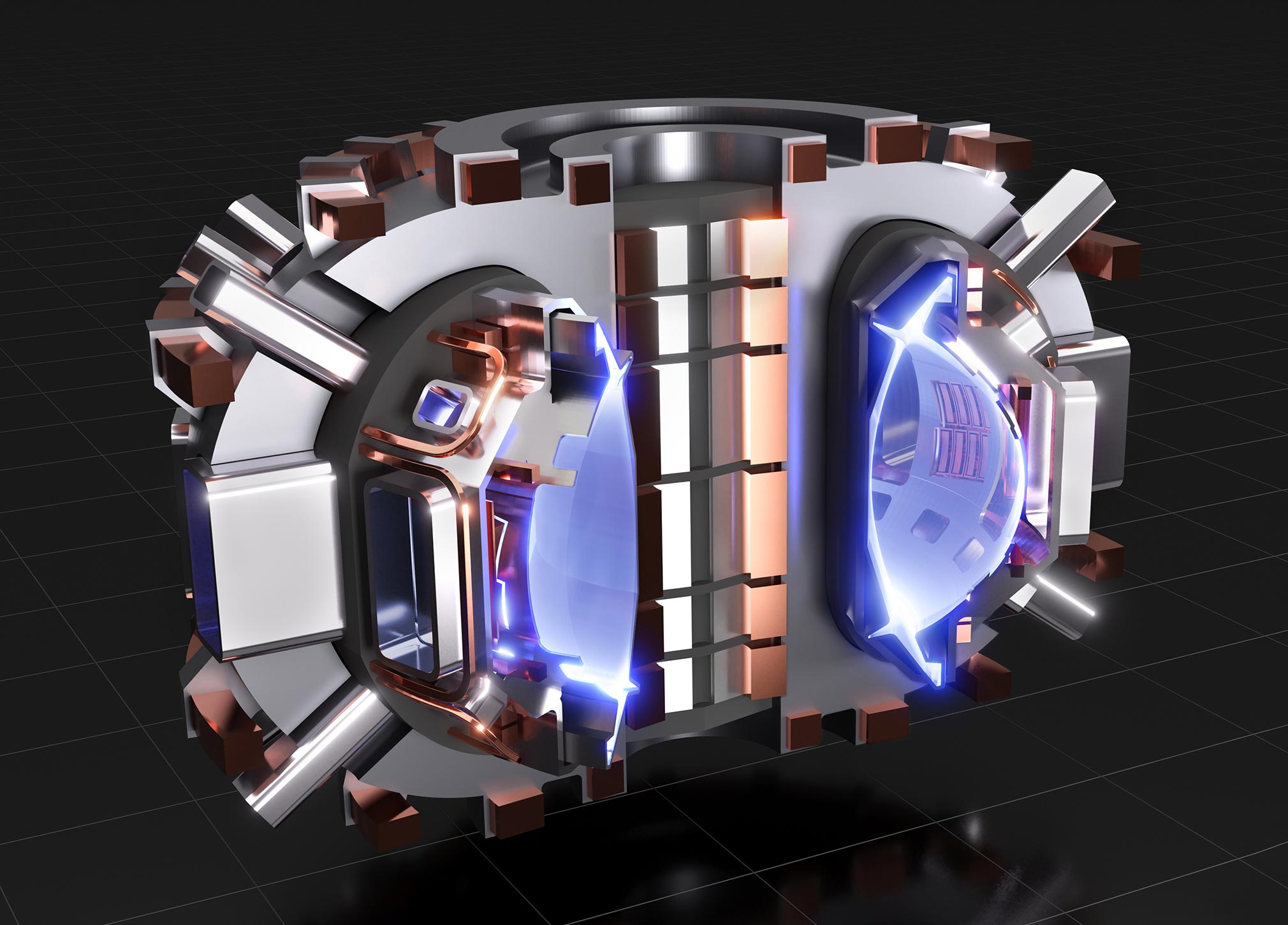
In fusion energy systems, especially tokamaks, these magnets are critical to confining plasma — the extremely hot, ionized gas where fusion reactions occur.
Why Fusion Needs Magnetic Confinement
To achieve nuclear fusion on Earth, hydrogen isotopes must be heated to temperatures of over 150 million degrees Celsius, forming a plasma. No solid material can withstand direct contact with such temperatures. Instead, fusion reactors use powerful magnetic fields to levitate and contain plasma.
Traditional tokamaks (like ITER in France) use low-temperature superconductors, which are large, expensive, and energy-intensive. HTS magnets enable more compact, cost-effective, and energy-efficient fusion reactor designs.
The Breakthrough: SPARC and Commonwealth Fusion Systems (CFS)
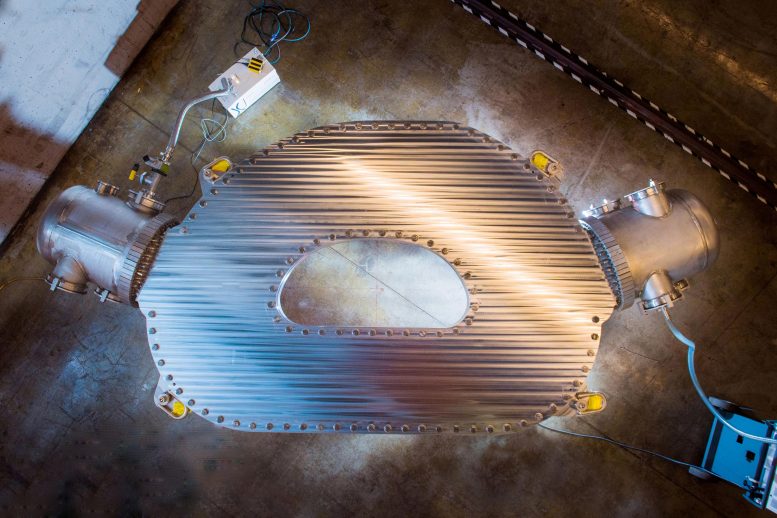
In 2021, Commonwealth Fusion Systems (CFS) — a startup spun out of MIT — demonstrated a revolutionary 20-tesla HTS magnet, the most powerful of its kind ever built.
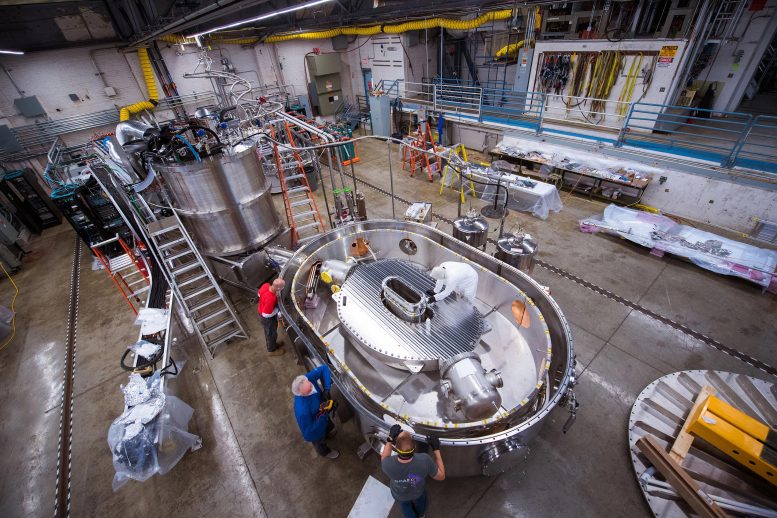
This magnet is now the cornerstone of their upcoming SPARC reactor, expected to be the first device to achieve a net energy gain from fusion.
Key details about SPARC:
- Uses compact HTS magnets to create powerful confinement
- Smaller and cheaper than ITER
- On track for completion by 2025
- Collaborates with MIT Plasma Science and Fusion Center
Advantages of HTS Magnets in Fusion Reactors
1. Smaller Footprint
HTS magnets produce stronger magnetic fields in a smaller space, allowing for compact reactor designs.
2. Lower Operating Costs
Because they work at higher temperatures, HTS magnets require less cryogenic cooling.
3. Modular Scalability
The compact design allows for modular reactors that can be deployed rapidly and in varied environments.
4. Faster Development Timelines
Smaller designs reduce construction time and cost, accelerating commercialization.
Other Major Players in HTS-Fusion
ITER (France)
Although ITER uses conventional superconductors, there is growing interest in retrofitting or integrating HTS technologies in future upgrades.
Tokamak Energy (UK)
Another key player using spherical tokamaks and HTS to fast-track commercial fusion.
Helion Energy (USA)
Focusing on non-tokamak approaches like pulsed fusion, with interest in magnetic field advances.
TAE Technologies (USA)
Developing field-reversed configurations using advanced magnetic containment.
Future Impact of Hot-Superconductor Magnets
Accelerated Fusion Timelines
HTS magnets could enable the first commercial fusion reactors as early as the 2030s, much faster than originally expected.
Climate and Energy Security
Fusion reactors using HTS could provide clean, non-carbon, and non-intermittent energy — crucial for fighting climate change.
Decentralized Power Grids
Smaller, modular fusion reactors can power remote areas, industries, or even microgrids.
Cross-Industry Applications
HTS technologies are also impacting MRI machines, maglev trains, particle accelerators, and quantum computing.
Challenges and Considerations
1. Manufacturing Complexity
HTS tapes and materials like REBCO are difficult and expensive to produce.
2. Long-Term Stability
Durability and maintenance of these materials under high neutron radiation is still being studied.
3. Economic Scalability
Though HTS lowers cost-per-magnet, the overall system cost remains high until mass production scales.
Conclusion
Hot-superconductor magnets represent a paradigm shift in fusion energy technology. With companies like Commonwealth Fusion Systems, Tokamak Energy, and MIT leading the charge, the long-elusive dream of limitless, clean fusion power is finally inching toward reality.
By enabling smaller, more efficient, and economically viable reactors, HTS magnets might be the final piece of the puzzle that brings fusion energy from the lab to the grid.


